


In the field of engineering plastics, PP material hard board (polypropylene board) has become an indispensable basic material in many industries due to its excellent
comprehensive performance and high cost-effectiveness. Whether it is chemical anti-corrosion, environmental protection equipment, food processing, or machinery
manufacturing, its presence can be seen. This article will systematically sort out the core characteristics, performance shortcomings, and selection points of PP board,
helping you comprehensively understand this practical material.
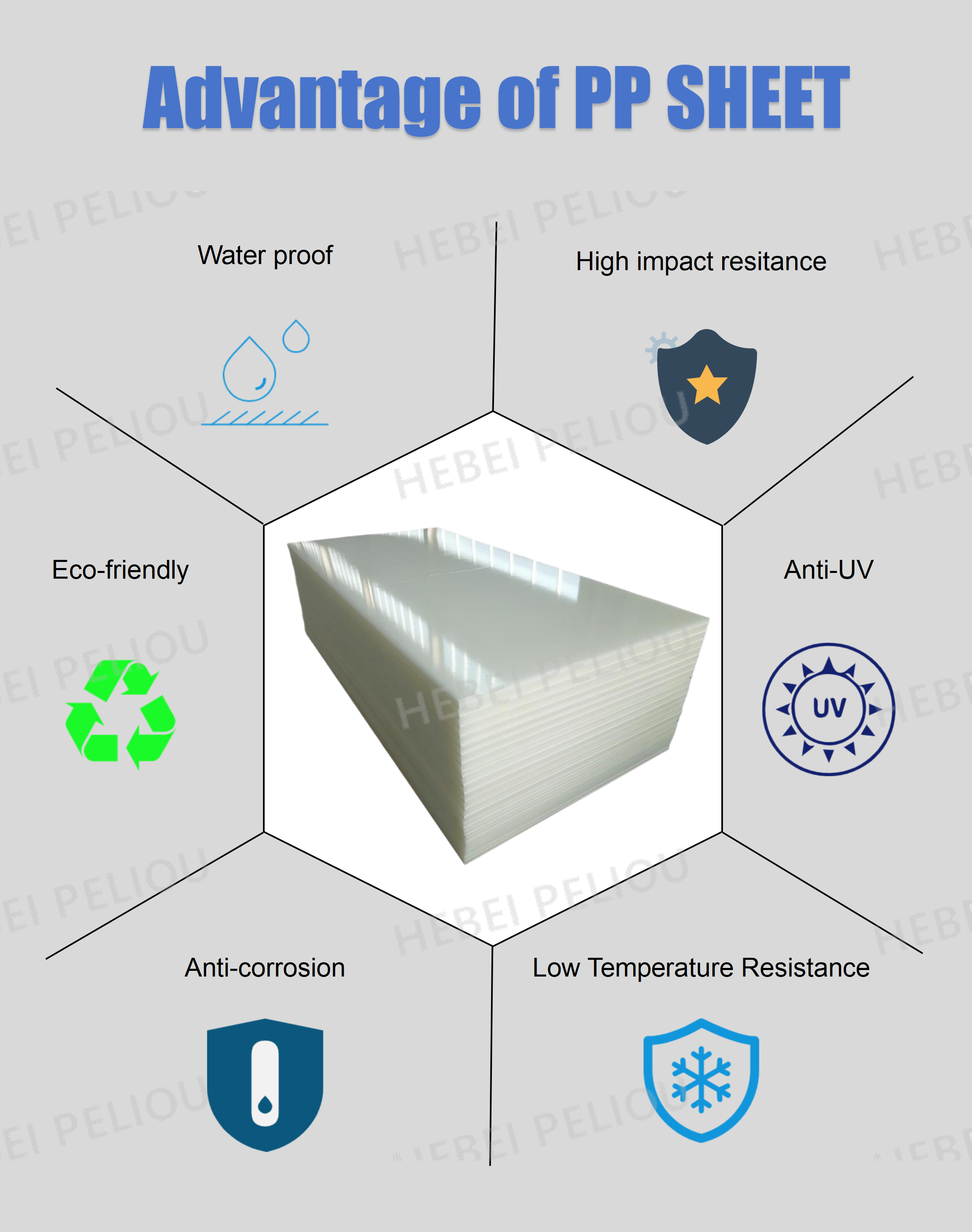
1、 The core advantages of PP hard board
1. Lightweight and durable, easy to process
The density of PP sheet is only 0.91-0.93 g/cm ³, which is about one eighth of that of steel, making it extremely convenient for handling, installation, and processing.
Even large-sized boards can be operated without the need for heavy lifting equipment. At the same time, its surface hardness is moderate and it has good scratch
resistance, which can effectively meet the wear resistance requirements in daily use.
2. Excellent heat resistance
Compared to ordinary plastics, PP sheets have outstanding heat resistance performance. Its Vicat softening point can reach 150 ℃, and the long-term use temperature
range is between 90-100 ℃. This means that in scenarios such as boiling water environments or high-temperature equipment linings, PP sheets can still maintain shape
stability and are not easily softened or deformed. This feature gives it unique advantages in fields such as hot water pipelines and high-temperature exhaust gas
treatment.
3. Excellent chemical stability
PP board has excellent resistance to the vast majority of acids, alkalis, salts, and organic solvents, especially suitable for strong corrosive environments such as
electroplating, chemical engineering, and sewage treatment. In practical applications, the service life of PP sheet is often extended by 3-5 years compared to ordinary
steel, and the maintenance cost is extremely low. However, it should be noted that it has poor tolerance to aromatic hydrocarbons (such as benzene) and chlorinated
hydrocarbons (such as carbon tetrachloride), and contact with such media should be avoided.
4. Environmental protection and hygiene, safety and non toxicity
PP material itself is non-toxic and odorless, meeting the national food contact material safety standards. It can be directly used for food processing countertops,
packaging equipment components, and even as auxiliary materials for medical devices. In addition, PP sheet does not release toxic gases during hot cutting or welding
processes, and the recycling rate after disposal can reach over 90%, making it an environmentally friendly material.
5. Good electrical insulation
PP board has stable dielectric properties and can be used as insulation components in electronic devices to ensure electrical safety. This feature is widely used in
scenarios such as distribution box partitions and electronic testing fixtures.


